
Tags
Antidote to the venom of poisonous hatred, Christmas, Easter Forgiveness, Forgiveness, The place of violence in our times, Thomas Halik, Touch the Wounds, Trigger a spiral of revenge, Trigger Warning, Venom of Hatred
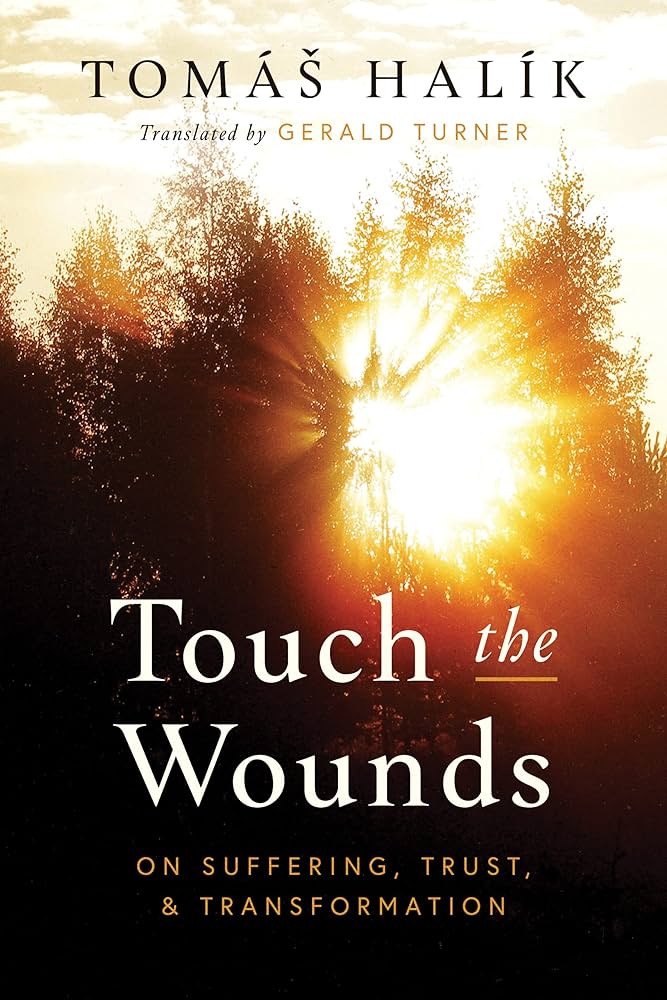 As 2023 closes, I wanted to draw your attention to a book that did not make it in time for the 2023 book list of December 5. Thomas Halik’s “Touch the Wounds: On Suffering, Trust, and Transformation” is a deep read, and is worthy of contemplation. He states his premise:
The painful wounds of the world are Christ’s wounds… in the Gospels, the resurrected Christ identifies himself with his wounds. They are proof of his identity. The wounded Christ is the real, living Christ. He shows us his wounds and gives us the courage not to conceal our own: we are permitted our own wounds.
Halik comments on the attempted assignation of Pope John Paul II on St. Peter’s Square back in May, 1981. A few days after Christmas 1983 (December 27 – forty years ago today), John Paul visited his would-be assassin, Mehmet Ali Agca, to express his forgiveness of him – a magnanimous act of generosity to an unsuspecting prisoner.

Halik observes that in this contrast to taking revenge, the Pope answers the question of how to truly heal those wounds when he embraced the man who had imperilled his life. Halik likened the embrace to Rembrandt’s painting of The Return of the Prodigal Son.
Therefore Halik exhorts:
We must not allow violence and hatred to triumph by drawing us onto their field of play where they would envenom us with their poisonous hatred, thereby clouding our brains and hearts and rendering us incapable of taking sensible and responsible decisions, forcing us to play by their evil rules, poisoning our language and tainting our lips with words that kill, with which they themselves inflame the spirit of vengeance and trigger a spiral of revenge, thus keeping the flame of permeant war alive in the world.
Only when we refuse to capitulate in this way to evil and do not become part of it will the human family perhaps walk without fear of mutual destruction along the path of the third millennium…
Thus we cannot blithely celebrate Christmas without recognizing its inexorable connection to Easter Forgiveness, for in Christ we recognize there is no forgiveness without great cost on the part of the forgiver (for more, see these posts on Forgiveness).
It should be noted that Agca had been sentenced to life imprisonment in Italy for the assassination attempt, but was pardoned by president Ciampi in June 2000 at the Pope’s request. Years later the former assassin visited the tomb of John Paul II in 2014, putting flowers on it. While in prison in 2007, Mehmet Ali Agca came to faith in Christ.
I suspect it was forgiveness that invited him to a new path of life.
 More Enigma Than Dogma
Pingback: Antidote to the Venom of Poisonous Hatred | More Enigma Than Dogma | Ned Hamson's Second Line View of the News
Hugely meaningful, many thanks Rusty! And a fruitful New Year to you.
LikeLiked by 1 person
Thanks Erroll, oh the grace and forgiveness of our Lord. Grace to you and may you enjoy the Lord’s favour in the New Year.
LikeLiked by 1 person
Thank you for the ever needed reminder to love our enemies and to do good to those who hate us.
LikeLiked by 2 people
Of course, much harder than it sounds and much more Christlike than our revenge. May Christ followers take the narrow path of costly love.
LikeLiked by 1 person
Thanks for the review, Rusty. Forgiving the enemy is an act of courage.
LikeLiked by 1 person
I wonder how much courage it takes to forgive. Sometimes I engage in a kind of thought experiment with conflict in the world. What if the U.S. were stirred to self-reflection re: the Taliban and did not bomb Afghanistan or Iraq; what if Ukraine let Russia take over; what if Israel was shaken to actually negotiate with Hamas; what if Hamas let the hostages go… All impossible I suppose, but I wonder if each side took the opposite approach to violence, vengeance, and retribution – what a different world we’d be living in. Meanwhile I watch the Venezuela – Guyana land claims with prayerful interest. I agree that forgiving takes courage – more courage than violence. I suspect we live in fear of a never ending stepping over/on by the aggressor. But I do know forgiveness starts with me. Shalom to you now and in the New Year. Thanks for your thoughtful responses.
LikeLiked by 1 person
Rusty, a huge favour please. May I quote Halik’s ‘premise’ in an upcoming blog on suffering? Of course with due acknowledgments and reference to your blog? Only if you feel comfortable with that. It’s such an impressive statement!
LikeLiked by 2 people
Of course – you may quote anything from my blog as an open source. The acknowledgement belongs to Halik of course – who wrote a worthy book about the Wounds of Jesus as it relates to our activity in the world.
LikeLike
Pingback: The Books of 2024 | More Enigma Than Dogma