
According to a recent Gallup poll, book readership is on the decline, with just 6% of adults naming reading as their favourite way to spend an evening. That’s down from 12% in 2016. Erin Rodewald responds to this in the “Delight of Reading Rediscovered“:
“During the height of the pandemic, when (presumably) we all had more time for leisure activities, Americans were more inclined to reach for the television remote than a bestselling novel. According to data from the U.S. Bureau of Labor Statistics, U.S. adults (age 15 and older) spent, on average, just 30 minutes per day reading in 2021, but upwards of three hours watching television.
A modest two-year increase in book sale activity between 2019 and 2021 had many observers believing the pandemic would give rise to a reading renaissance of sorts. But last year, those hopes were tempered when unit sales of print books fell 6.5%. Even more alarming than book-sale statistics is the percentage of Americans who have not picked up a book in the past 12 months. By one measure, roughly a quarter of American adults (23%) say they have not read a book in whole or part in the past year. Another study puts that figure closer to 50% and reports one in 10 adults hasn’t read a single book in the past decade.
I am not sure Canadians are much different, and as I have confessed numerous times, I did not grow up as a “reader”. It did not become a natural or enjoyable pastime till I started growing spiritually, and, well, till I just started growing up. My simple goal was to read a book a month – thus this year supplied such a rich source of reading – I hope something inspires you to a good read:
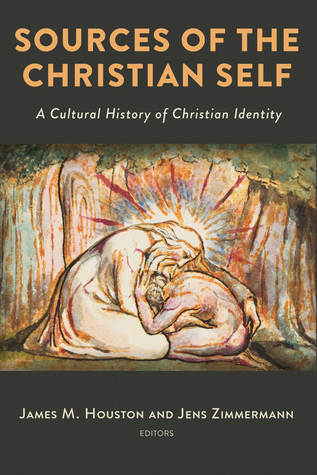
Sources of the Christian Self: A Cultural History of Christian Identity, edited by James M. Houston, Jens Zimmermann, 2018. This interdisciplinary book explores lived Christian identity through the ages. Beginning with such Old Testament figures as Abraham, Moses, and David and moving through the New Testament, the early church, the Middle Ages, and onward, the forty-two biographical chapters in Sources of the Christian Self illustrate how believers historically have defined their selfhood based on their relation to God/Jesus. At some 700 pages, this is a thorough study on what it means to be a person. A profound work for our day.

The Holy Fool, Harold Fickett, 1983. This novel follows the course of a seven day revival in little church in Santa Carina. But it is anything but reviving. Ted March, the main character and head pastor, has a fight with his associate, and reveals the strain of his marriage and family. He is a delightful walking contradiction… just like us all. Honest, funny, and at times profound, Fickett gives us a glimpse into the evangelical subculture of church and family – but treats the characters with honesty and compassion in an era of disdain. The main character comes to realize that “the sound of mirth – the holy laughter of God is the sound of my name in God’s mouth.” It is a beautiful epiphany of joy.

Leadership is… Serving with Integrity, Laurie D. Kennedy, 2022. This is a follow up volume from his 2020 book, “Leadership Is: Devotions for Servant Leaders.” Here Laurie refines his thoughts in the crucible of integrity – that long lost quality so desired, so needed, and often so missing in today’s leadership. Every chapter is charged with hard won insights, anecdotes, and warnings to encourage us toward leading with integrity. As he states, “leadership is integrating and demonstrating God’s values and principles into our daily lives.”
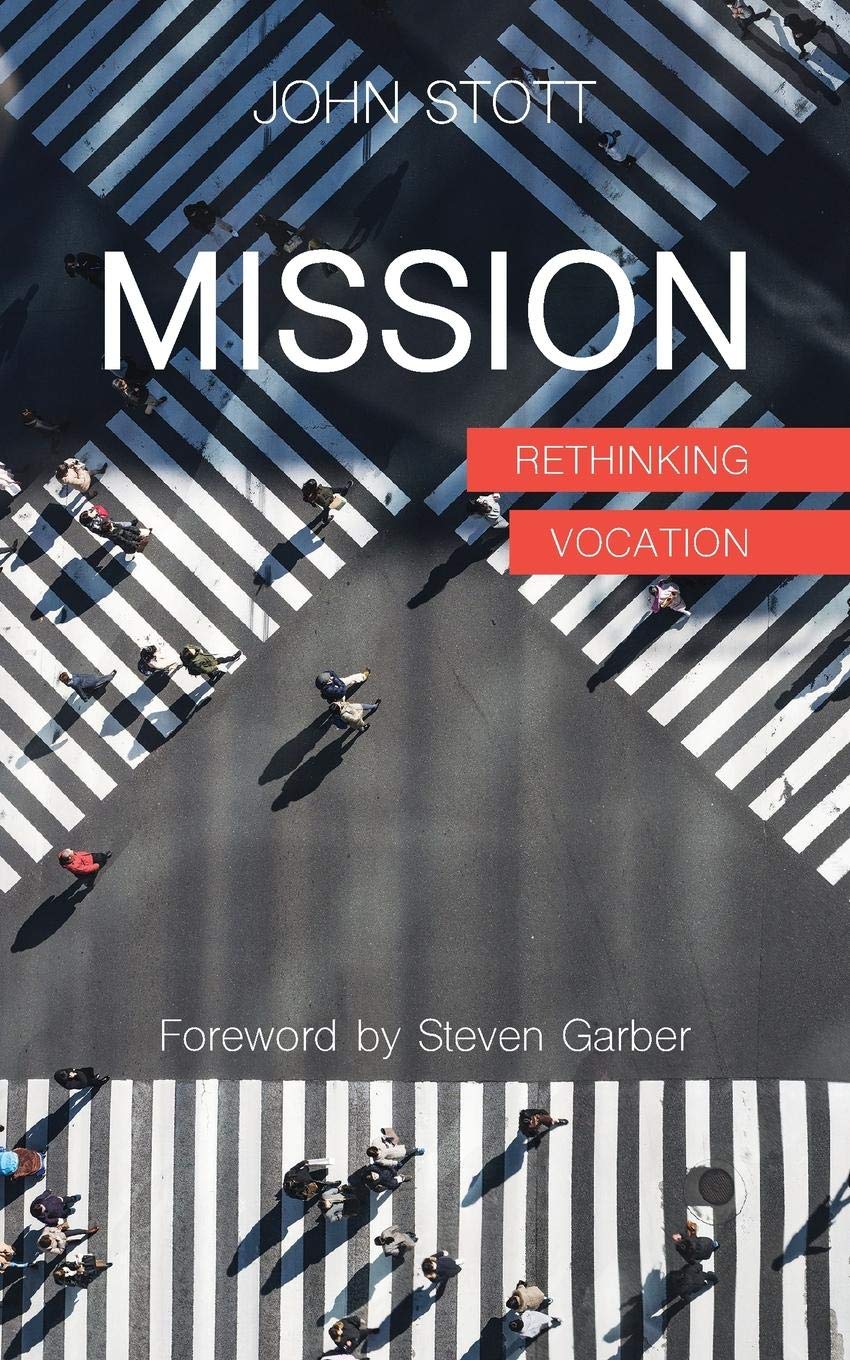
Mission: Rethinking Vocation, John Stott, 2019. This is an introduction to why the concept of vocation is so central to Christian living. This 32-page booklet is comprised of a chapter from John Stott’s book Christian Mission in the Modern World, along with an introduction by Regent’s own Professor of Marketplace Theology and Leadership, Steve Garber.
Professor Garber is passionate about helping people integrate how they spend their time with what they believe. This short book is a great primer on vocation and mission, and gets right at the heart of Regent’s mission to equip Christians for meaningful service in all aspects of life.
Being Mortal: Medicine and What Matters in the End, Atul Gawande, 2014. Dr. Gawande’s best seller ventures into the sensitive arena of death. “Through eye-opening research and gripping stories of his own patients and family, Gawande reveals the suffering this dynamic has produced… Doctors, uncomfortable discussing patients’ anxieties about death, fall back on false hopes and treatments… Here he examines its ultimate limitations and failures–in his own practices as well as others’–as life draws to a close. Riveting, honest, and humane, Being Mortal shows how the ultimate goal is not a good death but a good life–all the way to the very end.”

Death Comes for the Deconstructionist, Daniel Taylor, 2014. This is a fiction meant to speak to the current trend of deconstructionism popular with the millennial generation. This novel is novel in its approach to talk about the incoherence of deconstructed language by telling the story as “a tragicomic mystery, a detective story that is at once suspenseful, provocative, and emotionally resonant. It asks not only ‘whodunit’ but whether truth is ultimately something we create rather than discover.” As a counterpoint, see Timothy Keller’s “Reconstructing Faith.”
 Stella Maris, Cormac McCarthy, 2022. This is McCarthy’s 12th and final novel as he died in June of this year. In this novel he forces the reader to listen into the psychiatric therapy sessions of mathematical genius Alicia, who is dealing with the death of her brother and her own impending end. Or perhaps this is McCarthy living vicariously through Alicia’s final words in the book: “Hold my hand… because that’s what people do when they’re waiting for the end of something.”
McCarthy was known as “a writer who spurns the conventions of punctuation”; sometimes it is easy to get lost as to who exactly is talking. See “The three punctuation rules of Cormac McCarthy“.

Faith, Hope and Carnage: Nick Cave interviewed by Sean O’Hagen, 2022. This remarkable series of interviews from over 40 hours during Covid reveal such touching “intimate conversations and thoughtful exploration”. Nick Cave is an Australian rocker whose life was dramatically affected by the untimely accidental fall to death of his son, Arthur. He writes, “… it has to be about love. And it took a devastation to teach me that, to make me realize I needed to define myself first as a father and a husband and a son – part of the family – and then finally as an artist.” Over the course of the interviews we listen into his growing faith and journey ever so close to recognizing God in Christ. Listen to his timely recent interview by Krista Tippett (“On Being” podcast) – “Loss, Yearning, Transcendence.”
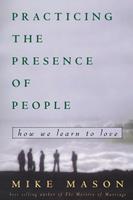
Practicing the Presence of People: How we learn to love, Mike Mason, 1999. A surprising little devotional that takes up themes from Brother Lawrence’s 17th century “Practicing the Presence of God.” Mason relentlessly makes the point that we learn to be present to God in the person in front of us. “Becoming a Christian begins with recognizing God in one human being, Jesus Christ, and goes on to the recognition of God’s image in every person.” Thus he climbs down from any high thinking about love to bring the reader back to his vital question: how do we learn to love?
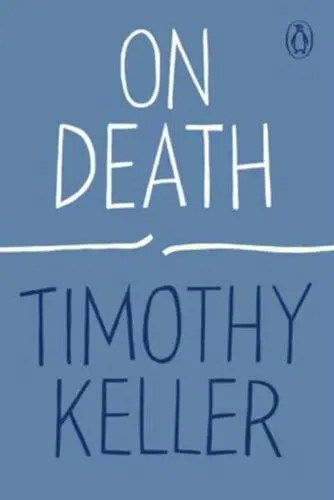
On Death, Timothy Keller, 2020. This 100 page little booklet is based on the sermon he gave at his wife’s sister’s funeral. After all, he writes, “In our culture one of the few places where it is acceptable talk about death is at a funeral.” Keller speaks to our fears and hopes as it relates to the inevitability of death. It should be noted that the late Timothy Keller contemplated death in the full knowledge that he was dying of pancreatic cancer (May, 2023). This is the last book he wrote in a series: “On Birth“, and “On Marriage“. To the end, Keller proved to be a reliable source of Christian truth.

Walking on Water: Reflections on Faith and Art, Madeleine L’Engle, 1980. The late L’Engle was an accomplished author by the time she was asked at age 61 to write her reflections on being a “Christian” artist. She reacts to the notion that sacred would be considered “clean and safe”. She writes, “How puny those words are. What pitiful reduction of the grandeur of the created world and its inhabitants. What a sad commentary on the church’s understanding of the God of the Universe.” By the end of her reflections she concludes, “I am beginning to see that almost every definition I find for being a Christian is also a definition of being an artist.”
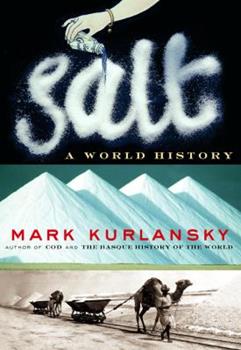
Salt: A World History, Mark Kurlansky, 2002. The surprising read of the summer, I didn’t think to get through this remarkably thorough tome in a short sitting – but such is the writing of Kurlansky, and such is the topic of salt. Kurlansky traces the history of salt’s influences from prehistoric China and ancient Africa (in Egypt they made mummies using salt) to Europe (in 12th-century Provence, France, salt merchants built “a system of solar evaporation ponds”) and the Americas, and along the way informs us that this, the only rock we eat, is indispensable to our diet and thus forged the need to find it, mine it, refine it, and find a thousand uses for it.

The Common Bible with Apocrypha and Deuterocanonical Books (RSV), 1973. This is the second year that I intentionally read through the Bible in a year – including the Apocrypha and Deuterocanonical Books. Commonly known as a Catholic Bible, the RSV is a trustworthy translation, though now over 65 years old – and language has changed over the years. My plan to get through these 1300 pages was to read about 4 pages a day – divided between the *Old Testament & Historical books, *the Wisdom Literature & Prophets, *the Apocrypha, and *the New Testament. By November I managed to complete the reading, and I look forward to ingesting the Bible again in a different translation next year.
I hope you find something of interest to inspire your reading. Merry Christmas!
 More Enigma Than Dogma
All of those look great – but where will I find the time to check them out? I already have half a dozen books purchased in the past few months that I haven’t had time to read.
LikeLiked by 1 person
….ah the hazard of having too many books and not enough time to read. I am in the practice of having one complete bookshelf devoted to books I haven’t read yet. It is now one and half book-selves (ha). I soldier on, one book at a time, slowly, etc. Most of my reading (truth be told) is while I wait in doctor’s offices (an increasing phenomenon as I age), and on vacation. Otherwise I steal some time away in the morning. Do try one book that captures your imagination. Merry Christmas!
LikeLiked by 1 person
I have a shelf of theology in my home office I hope to get to in 2024. On Parliament Hill I have five shelves of political volumes, some of which I haven’t read in decades. They are useful for dealing with young political staffers with no sense of history. I tell them to read book X, which will explain why they are wrong, then I pull it off the shelf
LikeLiked by 1 person
I love your sense of historical connectivity – and your (ahem) encouragement to young political staffers to gain a context for the history of ideas. But I spit out my coffee at your awareness that “book X will explain why they are wrong” (I might add, “again”). Too funny.
LikeLiked by 1 person
Walking
LikeLiked by 1 person
… as in “walking quickly to the book store?” – Or “Walking on Water” by L’Engle (a very good read). Aside from anything touched or written by Houston (who just celebrated his 101 birthday), I quite enjoyed “Faith, Hope and Carnage” re: interviews with Australian rocker – Nick Caves. Merry Christmas
LikeLike
A wonderful selection, Rusty. So many books are published yearly in my areas of interest that it’s difficult to read them all.
LikeLiked by 1 person
Yes, and I am resigned to reading what I can in almost providential order. Nevertheless, we read on. You are as prolific a reader as you are a writer. Appreciating your opening horizon on the poetic world (or larger world).
LikeLiked by 1 person
Thanks, Rusty 🙂
LikeLike
Pingback: Antidote to the Venom of Poisonous Hatred | More Enigma Than Dogma
Pingback: Antidote to the Venom of Poisonous Hatred | More Enigma Than Dogma | Ned Hamson's Second Line View of the News